How Smart Recruitment and Workforce Planning Are Driving Business Growth in 2026
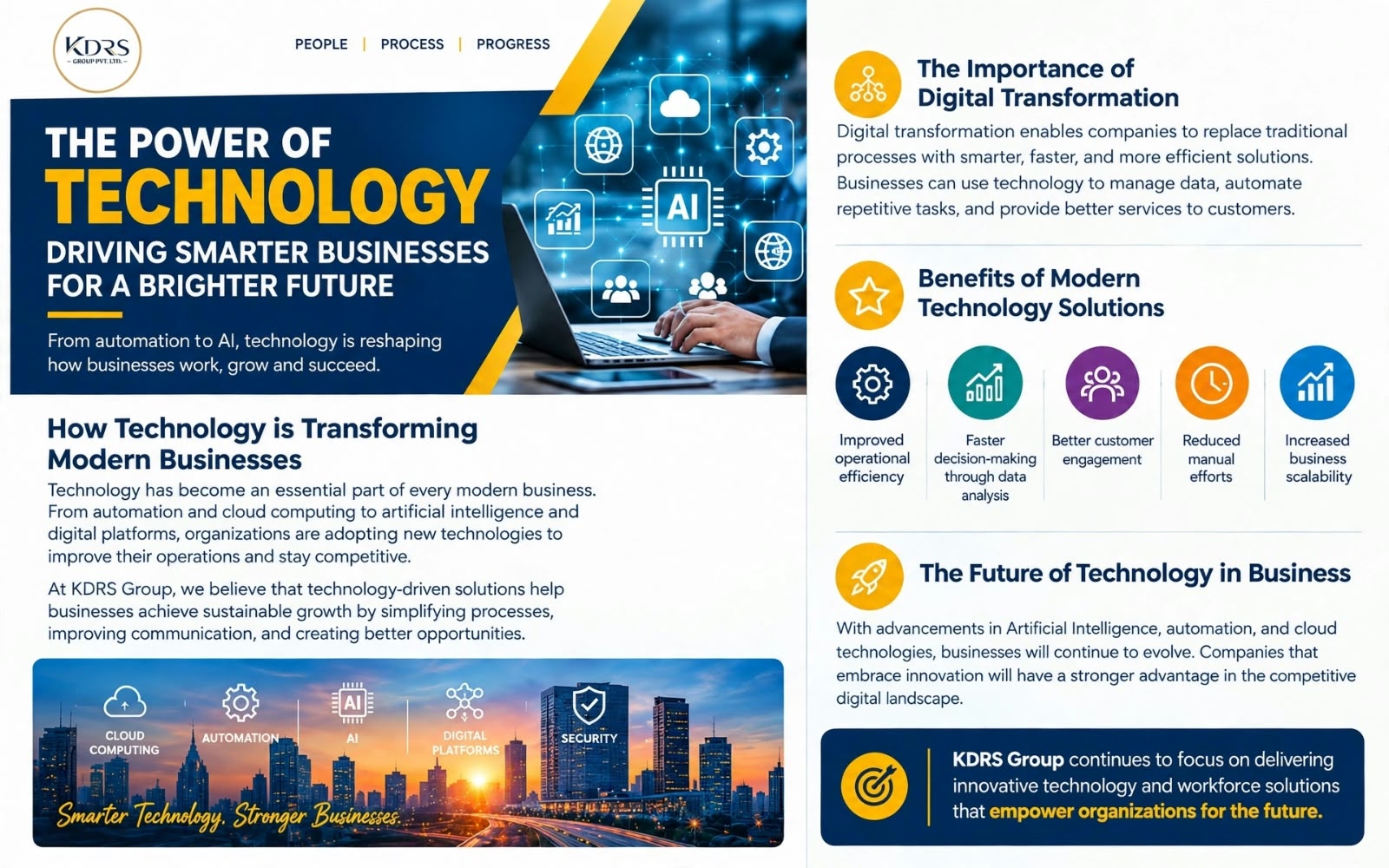
Smart recruitment and strategic workforce planning are helping businesses in 2026 attract the right talent, improve productivity, and reduce hiring costs. By combining modern recruitment practices with technology-driven HR solutions, organizations can build skilled teams, adapt to changing market demands, and achieve sustainable business growth.
In today’s rapidly evolving business environment, technology, talent, and operational efficiency are key drivers of success. In 2026, organizations are increasingly adopting smarter recruitment strategies and strategic workforce planning to attract skilled professionals, enhance productivity, and achieve sustainable business growth.
At KDRS Group, we understand that the right talent and effective HR solutions are essential for building a strong and successful organization. By combining modern recruitment practices with strategic workforce planning, businesses can adapt to changing market demands and strengthen their competitive advantage.
The Importance of Smart Recruitment
Recruitment has evolved beyond simply filling vacant positions. It is now a strategic process focused on identifying candidates whose skills, experience, and potential align with an organization’s goals.
A structured and efficient recruitment process enables businesses to reduce hiring delays, improve candidate selection, and build high-performing teams. By prioritizing the right talent, organizations can improve employee retention and establish a strong foundation for long-term success.
Key Benefits of Effective Workforce Planning
Strategic workforce planning helps organizations anticipate their staffing requirements and allocate resources efficiently. Its key benefits include:
- Access to Skilled Talent: Identify and attract candidates with the right skills and experience.
- Reduced Hiring Time and Costs: Streamline recruitment processes and optimize hiring resources.
- Improved Employee Productivity: Ensure employees are assigned roles that match their capabilities.
- Better Workforce Allocation: Align staffing levels with current business needs and future objectives.
- Sustainable Business Performance: Build a capable workforce that supports long-term organizational growth.
The Role of Technology in Modern HR
Technology is transforming recruitment and human resource management. Digital recruitment platforms, data-driven screening, and AI-assisted HR tools help organizations manage candidate information, streamline hiring activities, and make more informed recruitment decisions.
However, technology works best when combined with human expertise. Recruiters play a vital role in assessing communication skills, professional experience, cultural alignment, and overall suitability for a position. This balanced approach helps businesses make more effective and informed hiring decisions.
Building a Future-Ready Workforce
As industries continue to evolve, organizations must prepare for changing skill requirements, business expansion, and emerging market opportunities. Investing in talent acquisition, employee development, and strategic workforce planning enables businesses to remain flexible and competitive.
A well-defined recruitment strategy also helps organizations respond effectively to new projects, manage workforce demands, and identify the skills needed to achieve future business objectives.
How KDRS Group Supports Business Growth
At KDRS Group, we focus on delivering recruitment, HR, and workforce solutions tailored to the evolving needs of businesses. Our approach emphasizes identifying suitable talent, supporting efficient recruitment processes, and helping organizations develop workforce strategies aligned with their business goals.
By understanding each organization’s requirements, we aim to support better hiring decisions, improved workforce efficiency, and sustainable organizational development.